

Direct Impact
If you don’t measure it, you can’t manage it
Propofol is one of the most widely used drugs in critical care, yet it is administered without measuring its concentration in the patient. This section explains the clinical risks of that blind spot and how precision monitoring transforms sedation into measurable, safer medicine.
The Clinical Risk of Unmeasured Sedation
Propofol is the most widely used sedative in ICU. It is also administered entirely without measuring the blood concentration that determines its effect.¹ Clinicians adjust infusion rates based on behavioural observation, responsiveness, movement, grimacing, rather than on any knowledge of what is actually circulating in the blood. In a drug with significant inter-patient variability in metabolism and clearance,² that is a structural gap between intention and reality.
Scoring systems such as RASS and SAS assess behavioural response, not drug concentration.³ They cannot detect accumulation at a molecular level, and they cannot distinguish between appropriate sedation and unintended overexposure.⁴ The result is predictable: despite guidelines favouring lighter, individualised sedation, deep sedation remains common in mechanically ventilated patients.⁵
The consequences compound. Excess sedation delays spontaneous breathing trials and prolongs mechanical ventilation.⁶ Prolonged ventilation increases the risk of ventilator-associated pneumonia and other hospital-acquired infections.⁷ Sedation depth and duration are independently associated with ICU delirium,⁸ which affects up to 80% of ventilated patients, increases 1-year mortality, and is linked to persistent cognitive impairment after discharge.⁹
Each additional day of delirium increases mortality risk.¹⁰ All of this flows, at least in part, from dosing without measurement.
How Measured Sedation Changes Outcomes
Critically ill patients are not “average.” Organ dysfunction, inflammation, age, body composition, concurrent therapies, and inherited differences in drug metabolism all influence how propofol behaves in any individual.² The same dose can produce very different blood concentrations in different patients, and population-level genetic variation means dose requirements may also differ across ethnic groups.²
Without directly measuring concentration, clinicians are effectively dosing blind, estimating effect based on behaviour rather than knowing how much drug is actually circulating. The difference between optimal sedation and unintended accumulation is therefore often invisible until complications emerge.¹¹
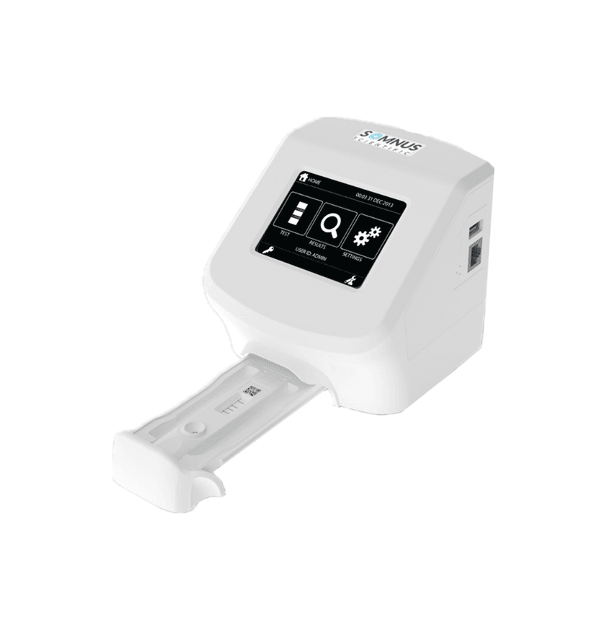
ProSed® changes that. By providing rapid, near-patient measurement of blood propofol concentration, sedation shifts from subjective assessment to objective pharmacology.¹ Clinicians can see, in real time, the relationship between administered dose and circulating level, regardless of a patient’s physiology, background, or metabolic profile.
Measured concentration enables safer titration toward defined therapeutic ranges associated with lighter, safer sedation.¹² Earlier detection of accumulation allows timely dose adjustment before deep sedation takes hold.¹² More precise titration strengthens spontaneous awakening trials, supports earlier extubation, and reduces unnecessary ventilation duration in appropriately selected patients.⁶
Objective measurement also improves adherence to structured care pathways such as the ABCDEF bundle, where sedation optimisation is central to delirium prevention and early mobilisation.¹³ Consistent data reduces inter-clinician variability and strengthens the defensibility of clinical decision-making.
Sedation transitions from empirical estimation to precision pharmacology.
The patient benefits. So does the hospital.
Summary
Why Measurement Matters
Critical care has evolved toward precision in ventilation, haemodynamics, and infection control, yet sedation remains largely empirical. The evidence demonstrates that depth and duration of sedation materially affect recovery, cognition, and survival. Real-time propofol measurement closes this gap, transforming sedation into a measurable, controllable therapy aligned with modern standards of patient safety.
Clinical References
Clinical Evidence
¹ Somnus Technology Overview – ProSed workflow
² Propofol pharmacokinetic variability – Somnus Technical Appendix
³ Devlin JW et al. (2018) – PADIS Guidelines
Clinical Practice Guidelines for the Prevention and Management of Pain, Agitation/Sedation, Delirium, Immobility, and Sleep Disruption in Adult Patients in the ICU Crit Care Med. 2018;46(9):e825–e873. https://doi.org/10.1097/CCM.0000000000003299
⁵ Mehta S et al. (2015) Prevalence, risk factors, and outcomes of delirium in mechanically ventilated adults Crit Care Med. 2015;43:557–566.
https://doi.org/10.1097/CCM.0000000000000727⁶ Ely EW et al. (2001) The impact of delirium in the intensive care unit on hospital length of stay Intensive Care Med. 2001;27:1892–1900.
https://doi.org/10.1007/s00134-001-1132-2⁷ Continuing Education in Anaesthesia, Critical Care & Pain (2008) Sedation in the intensive care unit CEACCP. 2008;8(2):41–45.
https://doi.org/10.1093/bjaceaccp/mkn004⁸ Burry L et al. (2021) Sedation strategy and ICU delirium: a multicentre, population-based propensity score-matched cohort study BMJ Open. 2021;11:e045087.
https://doi.org/10.1136/bmjopen-2020-045087⁹ Salluh JIF et al. (2015) Outcome of delirium in critically ill patients: systematic review and meta-analysis BMJ. 2015;350:h2538.
https://doi.org/10.1136/bmj.h2538
¹⁰ Pisani MA et al. (2009) Days of delirium are associated with 1-year mortality in an older ICU population Am J Respir Crit Care Med. 2009;180(11):1092–1097.
https://doi.org/10.1164/rccm.200904-0537OC¹¹ Absalom AR, Kenny GNC (2001) Propofol dosing regimens for ICU sedation based upon an integrated pharmacokinetic-pharmacodynamic model
Anesthesiology. 2001;95(2):324–333.
https://doi.org/10.1097/00000542-200108000-00015¹ ² Devlin JW et al. (2018) – PADIS Guidelines
https://doi.org/10.1097/CCM.0000000000003299
¹³ Barnes-Daly MA et al. (2018) Improving health care for critically ill patients using an evidence-based collaborative approach to ABCDEF bundle dissemination and implementation Worldviews Evid Based Nurs. 2018;15(3):206–216.
https://doi.org/10.1111/wvn.12290Have questions about the evidence?
Our clinician-led team would be happy to discuss the research and modelling, get in touch to arrange a call.
Contact Us
Important Investment Information
This website contains information about Somnus Scientific Limited that is directed exclusively at professional investors.
In the United Kingdom, this information is intended only for investment professionals and high net worth entities within the meaning of the Financial Services and Markets Act 2000 (Financial Promotion) Order 2005 (as amended), or other persons to whom it may lawfully be communicated.
In the United States, any investment-related information is intended solely for persons who qualify as “Accredited Investors” under Regulation D of the Securities Act of 1933.
Nothing on this website constitutes an offer to sell or a solicitation of an offer to buy any securities. Any investment will be made only on the basis of formal investment documentation provided separately.
Investments in early-stage medical technology companies are high risk. Capital is at risk and investors may lose some or all of their investment. Prospective investors should seek independent professional advice before making any investment decision.