

Preventable Cost
The system is already paying for not measuring.
Propofol is one of the most widely used drugs in critical care, yet it is administered without measuring its concentration in the patient. This section explains the clinical risks of that blind spot and how precision monitoring transforms sedation into measurable, safer medicine.
The Cost of Unmeasured Sedation at Scale
ICUs are among the most expensive environments in healthcare, where small increases in ventilation time or length of stay materially affect annual expenditure.¹ When sedation is delivered without blood concentration measurement, dosing variability increases the likelihood of prolonged mechanical ventilation and delayed recovery, compounding inefficiency across thousands of patients every year.²
Without measurement, clinicians default toward caution. Deeper or longer infusion reduces the perceived risk of agitation or instability, but that clinical logic, repeated across millions of sedation episodes annually, embeds avoidable cost into critical care pathways.² Deep or prolonged sedation drives ICU delirium,³ which in turn extends hospitalisation, increases complication rates, and raises readmission risk. In the United States alone, the annual economic burden of delirium is estimated between $38 billion and $152 billion.⁴
Excess sedation also increases the risk of ventilator-associated pneumonia (VAP), a serious complication of prolonged mechanical ventilation. VAP independently increases ICU length of stay, antibiotic use, and mortality risk. In the United States, each episode of VAP is estimated to add approximately $40,000 in treatment costs.⁷ When multiplied across large ICU populations, these preventable complications represent a significant and recurring financial burden.
Ventilated patients require higher nurse-to-patient ratios, amplifying staffing intensity in already resource-limited environments.⁵ In procedural settings, the inability to confirm when propofol concentrations have fallen to safe levels results in cautious discharge timing, reducing daily throughput and constraining utilisation of high-demand endoscopy and ambulatory units.⁶
Structural Inefficiency and the Opportunity for Correction
The cost of unmeasured sedation is not incidental, it is structural. It recurs every day, across every ventilated patient, in every ICU. Measurement does not introduce new spending; it addresses an embedded inefficiency within a high-cost pathway.
Even modest reductions in ventilation duration or ICU length of stay generate disproportionate savings given the fixed and variable cost structure of critical care.¹ At national scale, those gains are material, tens of millions annually in the UK, billions in addressable inefficiency in the United States.
The opportunity extends beyond ICU. The inability to monitor propofol continuously limits broader adoption of total intravenous anaesthesia as an alternative to inhaled anaesthetic gases, which currently account for approximately 5% of hospital carbon emissions.⁷ Reliable near-patient monitoring removes one of the principal barriers to scaling TIVA, supporting both patient outcomes and healthcare sustainability commitments.
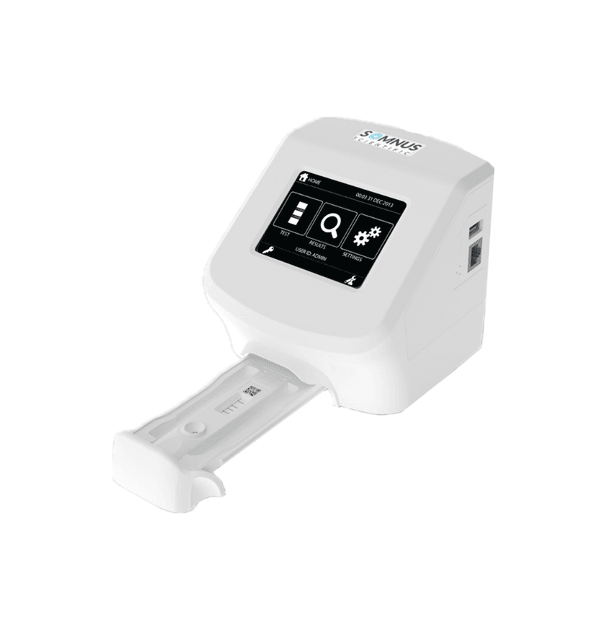
By aligning drug delivery with objective concentration data, ProSed® improves throughput, reduces complication-related expenditure, and strengthens the clinical and financial case for precision sedation across critical care and ambulatory settings.
Summary
If you don’t measure it, you can’t manage it
The economic burden linked to sedation variability is not hypothetical, it is already embedded within ICU occupancy, complication rates, workforce strain, and environmental impact.
Measurement provides a mechanism to correct that preventable cost by introducing precision into one of the most resource-intensive areas of modern healthcare delivery.
Clinical References
Clinical Evidence
¹ ICU cost structure and length of stay impact
Ely EW et al. (2001)
The impact of delirium in the intensive care unit on hospital length of stay
Intensive Care Medicine. 2001;27:1892–1900.
https://doi.org/10.1007/s00134-001-1132-2² Sedation depth, variability, and ventilation duration
Mehta S et al. (2015)
Prevalence, risk factors, and outcomes of delirium in mechanically ventilated adults
Critical Care Medicine. 2015;43:557–566.
https://doi.org/10.1097/CCM.0000000000000727³ Sedation strategy and delirium association
Burry L et al. (2021)
Sedation strategy and ICU delirium: a multicentre, population-based propensity score-matched cohort study
BMJ Open. 2021;11:e045087.
https://doi.org/10.1136/bmjopen-2020-045087⁴ Economic burden of delirium (US estimate $38–152bn)
Leslie DL, Inouye SK (2011)
The importance of delirium: economic and societal costs
Journal of the American Geriatrics Society. 2011;59 Suppl 2:S241–S243.
https://doi.org/10.1111/j.1532-5415.2011.03671.x(Referenced widely in US healthcare economic analyses and cited in AMA Journal of Ethics 2023 review.)
⁵ Nursing intensity and ventilated patients
Continuing Education in Anaesthesia, Critical Care & Pain (2008)
Sedation in the intensive care unit
CEACCP. 2008;8(2):41–45.
https://doi.org/10.1093/bjaceaccp/mkn004(Discusses ventilation, staffing burden, and sedation management impact.)
⁶ Procedural sedation discharge and recovery uncertainty
Cleveland Clinic Review (2025)
Driving after endoscopic procedural sedation: Is a 24-hour ban too long?
https://consultqd.clevelandclinic.org/driving-after-endoscopic-procedural-sedation-is-a-24-hour-ban-too-long(Discusses conservative discharge guidance and psychomotor recovery evidence.)
⁷ Anaesthetic gases and environmental impact
McGain F, Naylor C (2014)
Environmental sustainability in hospitals – a systematic review and research agenda
Journal of Health Services Research & Policy. 2014;19(4):245–252.
https://doi.org/10.1177/1355819614534836Also widely cited:
Sherman JD et al. (2012)
Life cycle greenhouse gas emissions of anesthetic drugs
Anesthesia & Analgesia. 2012;114(5):1086–1090.
https://doi.org/10.1213/ANE.0b013e31824f6940Have questions about the evidence?
Our clinician-led team would be happy to discuss the research and modelling, get in touch to arrange a call.
Contact Us
Important Investment Information
This website contains information about Somnus Scientific Limited that is directed exclusively at professional investors.
In the United Kingdom, this information is intended only for investment professionals and high net worth entities within the meaning of the Financial Services and Markets Act 2000 (Financial Promotion) Order 2005 (as amended), or other persons to whom it may lawfully be communicated.
In the United States, any investment-related information is intended solely for persons who qualify as “Accredited Investors” under Regulation D of the Securities Act of 1933.
Nothing on this website constitutes an offer to sell or a solicitation of an offer to buy any securities. Any investment will be made only on the basis of formal investment documentation provided separately.
Investments in early-stage medical technology companies are high risk. Capital is at risk and investors may lose some or all of their investment. Prospective investors should seek independent professional advice before making any investment decision.