

Real Savings
If you don’t measure it, you can’t manage it
In intensive care, cost is driven by time. Ventilation hours, ICU bed-days, and complication management are the real economic levers, not drug price. When sedation is guided by clinical observation alone, without any measurement of actual blood concentration, over-sedation becomes the default. Patients stay longer. Complications accumulate. Beds don't free up.
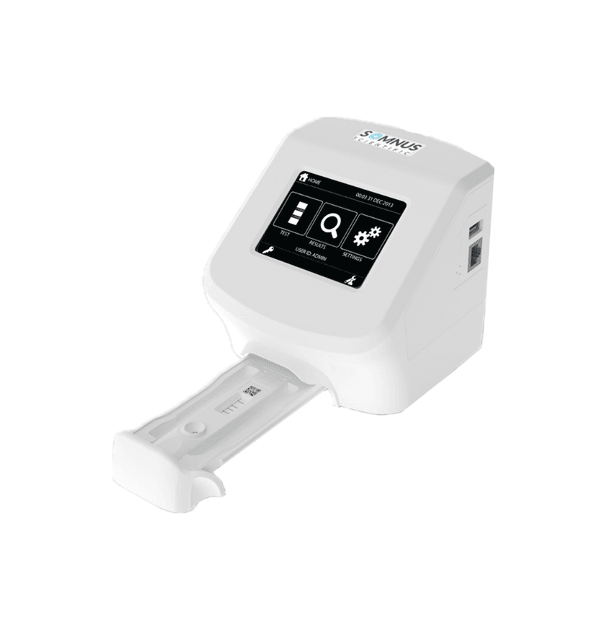
ProSed® introduces real-time blood propofol measurement at the bedside, enabling precise titration where previously there was only estimation. The financial consequence is direct and measurable.
The Economic Problem: Time-Based ICU Cost
ICU days are among the most expensive services a hospital provides,³ with mechanical ventilation acting as a significant incremental cost driver.⁴ Sedation strategies that reduce ventilation duration lower total ICU expenditure directly,⁵ and in both the NHS and US systems, ICU capacity remains constrained, resource-intensive, and operationally critical to overall hospital performance.⁶ Even modest reductions in ventilation time or length of stay compound across thousands of patients every year, converting incremental clinical improvements into meaningful, measurable financial impact at system level.
UK: Quantified NHS Impact
Internal modelling estimates that excess sedation costs the NHS approximately £71 million annually across UK ICUs, avoidable ventilation hours, prolonged stays, and downstream complications that arise when blood propofol concentration cannot be measured in real time.⁷
A single £31 ProSed® test generates approximately £62 in provider-level savings, a 2:1 return driven by fewer ventilated bed-days, earlier extubation, shorter ICU stays, and reduced complication management.⁸ Savings accrue at trust level, within the same episode of care.³ ⁵
United States: Higher Cost Base, Larger Scale
The same mechanism operates on a materially larger cost base in the US. Somnus modelling estimates excess sedation contributes approximately $1 billion annually across US ICUs,⁷ with higher daily bed costs amplifying the return on every improvement in ventilation duration or length of stay.³ ⁴ With an estimated ~31.7 million addressable tests annually,⁹ the procedural setting adds further scale: conservative discharge protocols across ambulatory and endoscopy facilities persist because residual propofol concentrations are unknown at the point of care, constraining throughput and extending recovery times. The combined annual cost impact across ICU and procedural settings exceeds $9 billion.¹⁴
Clinical-Economic Mechanism
Blood propofol concentration cannot be measured in real time at the bedside, and laboratory testing remains too slow and impractical to support dynamic ICU titration.¹⁰ Clinicians therefore adjust dosing based largely on observed clinical effect, creating ongoing risk of accumulation, over-sedation, delayed extubation, and unnecessarily prolonged ICU stay. Multiple systematic reviews confirm that improved sedation practice reduces mechanical ventilation duration and ICU length of stay.⁵ ¹¹ ProSed® introduces objective near-patient measurement into this process, transforming sedation management from estimation to evidence-based control.
Delirium as a Cost Multiplier
Over-sedation is a recognised independent risk factor for ICU delirium¹², a complication associated with prolonged ventilation, extended stays, and an annual economic burden of $38–152 billion in the US alone.¹³ Precision sedation does not need to eliminate delirium to generate value. Even modest reductions in incidence compound materially at system scale.⁵ ¹¹
Beyond ICU: US Procedural Throughput
conservative discharge protocols persist because residual propofol concentrations are simply unknown at the point of care.¹⁴ This uncertainty extends recovery times, limits same-day throughput, and constrains procedural capacity in high-volume environments. The estimated annual cost impact exceeds $8 billion in the United States,¹⁴ reflecting delayed discharge, lost productivity, and operational inefficiency. Objective measurement enables greater discharge confidence, improved patient flow, and higher utilisation of existing infrastructure without expanding physical capacity.
Summary
The bottom line.
Over-sedation is a recognised independent risk factor for ICU delirium¹², a complication associated with prolonged ventilation, extended stays, and an annual economic burden of $38–152 billion in the US alone.¹³ Precision sedation does not need to eliminate delirium to generate value. Even modest reductions in incidence compound materially at system scale.⁵ ¹¹
Clinical References
Clinical Evidence
1. Kahn JM et al. Potential Value of Regionalized Intensive Care. Am J Respir Crit Care Med. 2008.
https://pubmed.ncbi.nlm.nih.gov/18006884/
2. Dasta JF et al. Daily cost of an intensive care unit day: The contribution of mechanical ventilation. Crit Care Med.2005.
https://pubmed.ncbi.nlm.nih.gov/15942342/
3. Tatsis F et al. Cost-Effectiveness in Critical Care: A Systematic Review of Empirical Evaluations.
https://www.mdpi.com/2227-9032/13/21/2783
4. Dasta JF et al. Daily cost of an intensive care unit day: The contribution of mechanical ventilation.
https://pubmed.ncbi.nlm.nih.gov/15818109/
5. Jackson DL et al. Systematic review: impact of sedation practice in ICU on resource use and costs. Critical Care. 2010.
https://www.ncbi.nlm.nih.gov/pmc/articles/PMC2887180/
6. UK Parliament Written Question (2023). Hospital bed-day cost estimates.
https://questions-statements.parliament.uk/written-questions/detail/2023-03-14/165361
7. British Medical Association.
NHS hospital bed data analysis.
https://www.bma.org.uk/advice-and-support/nhs-delivery-and-workforce/pressures/nhs-hospital-beds-data-analysis
8. Somnus Cost-Consequence Model (UK & US)
Internal Modeling
9. Somnus Health Economic Summary
Internal Modeling
10. Somnus Market Size & ICU Assumption Modelling
Internal Modeling
11. Somnus Scientific Evidence Materials
Internal Modeling
11. Burry L et al. Daily sedation interruption versus no interruption for critically ill adult patients. CochraneDatabase. 2014.
https://www.cochranelibrary.com/cdsr/doi/10.1002/14651858.CD009176.pub2/full
12. Oh ES et al. Delirium in Older Persons:Advances in Diagnosis and Treatment. JAMA. 2017.
https://jamanetwork.com/journals/jama/fullarticle/2598855
13. Oh ES et al. Delirium in Older Persons:Advances in Diagnosis and Treatment. JAMA. 2017.
https://jamanetwork.com/journals/jama/fullarticle/2598855
14. Leslie DL et al. The attributable cost ofdelirium in the United States. J Am Geriatr Soc. 2008.
https://pubmed.ncbi.nlm.nih.gov/18482293/le/2598855
15. Somnus US Procedure Suite Economic Assessment
Internal Modeling
Have questions about the evidence?
Our clinician-led team would be happy to discuss the research and modelling, get in touch to arrange a call.
Contact Us
Important Investment Information
This website contains information about Somnus Scientific Limited that is directed exclusively at professional investors.
In the United Kingdom, this information is intended only for investment professionals and high net worth entities within the meaning of the Financial Services and Markets Act 2000 (Financial Promotion) Order 2005 (as amended), or other persons to whom it may lawfully be communicated.
In the United States, any investment-related information is intended solely for persons who qualify as “Accredited Investors” under Regulation D of the Securities Act of 1933.
Nothing on this website constitutes an offer to sell or a solicitation of an offer to buy any securities. Any investment will be made only on the basis of formal investment documentation provided separately.
Investments in early-stage medical technology companies are high risk. Capital is at risk and investors may lose some or all of their investment. Prospective investors should seek independent professional advice before making any investment decision.